Sheet 0
Sheet 2
Sheet 3

Sheet 4

Sheet 5

Sheet 6

Sheet 7

Sheet 8

Sheet 9

Sheet 09b
Sheet 10

Sheet 11
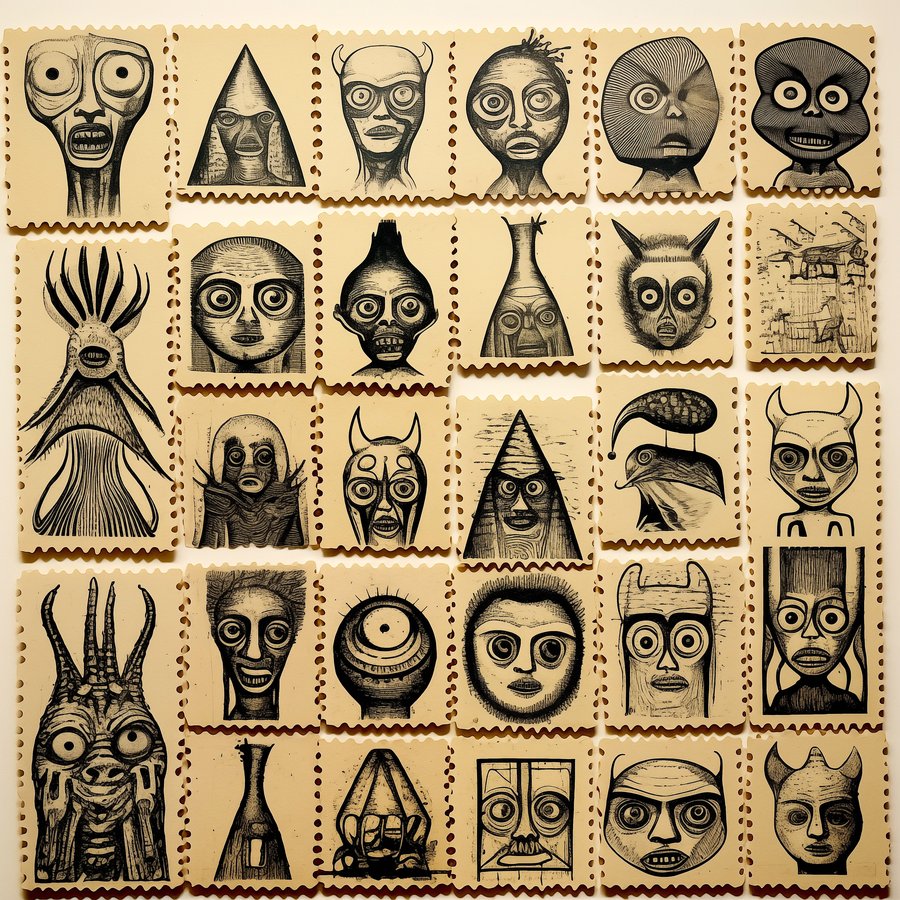
Sheet 12
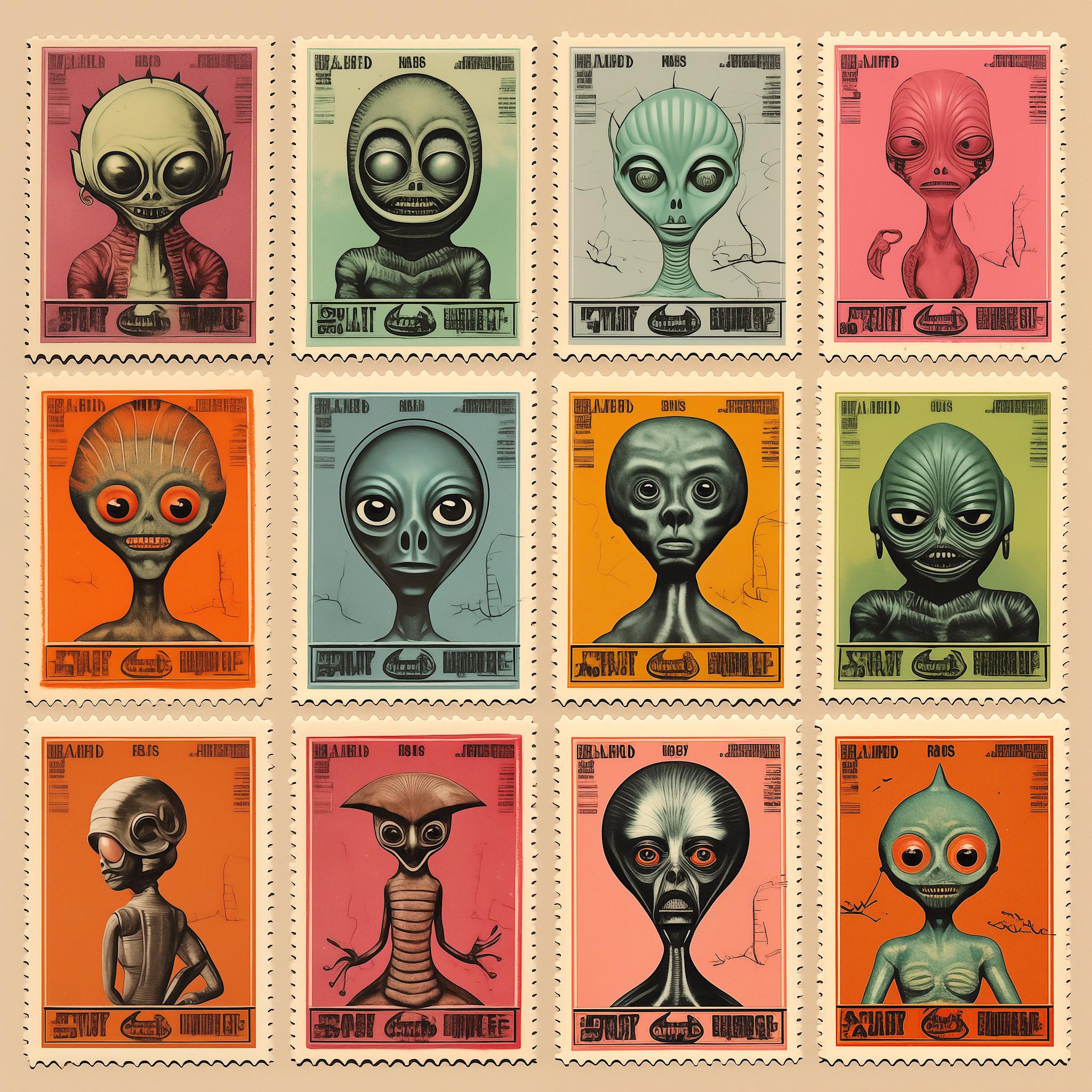
Sheet 13
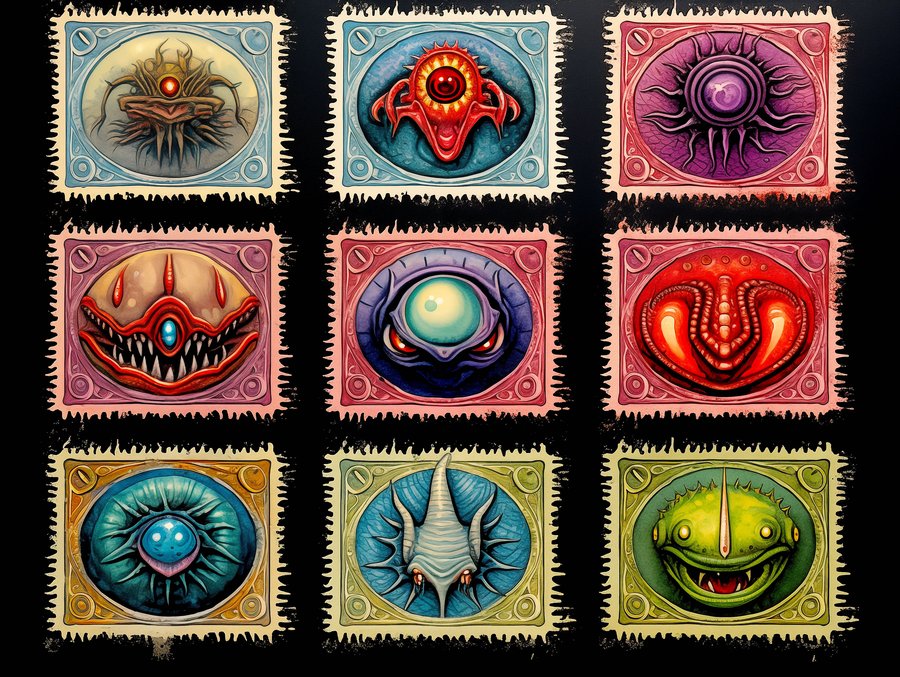
Sheet 14
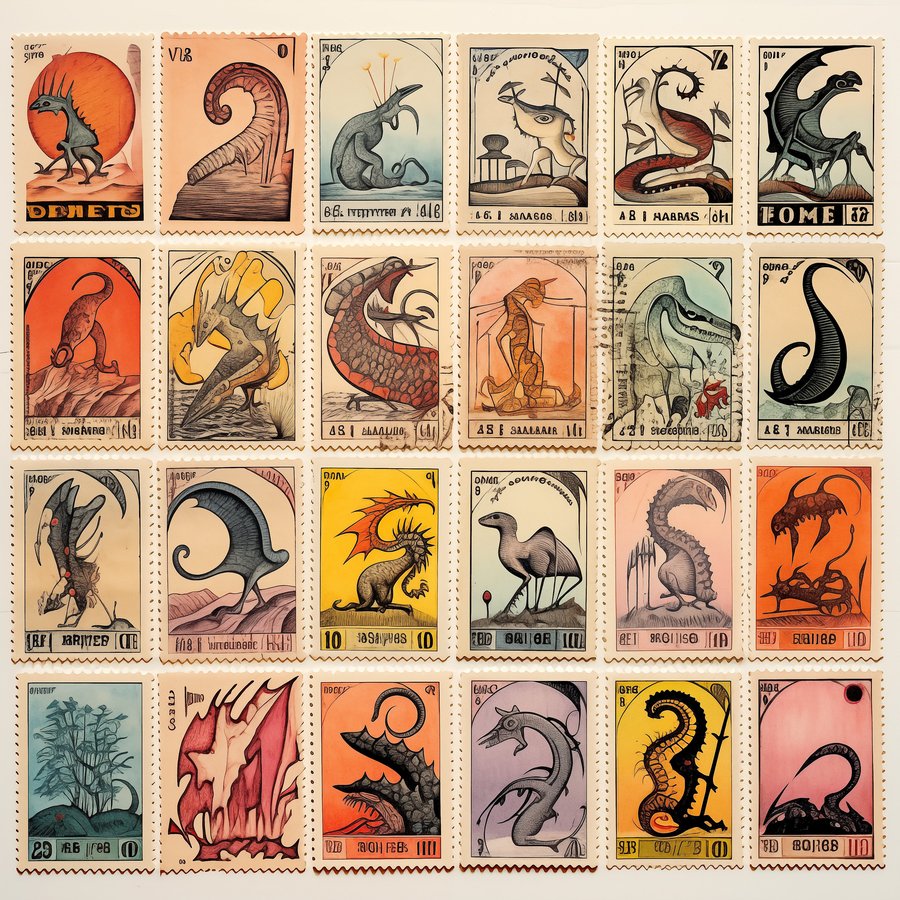
Sheet 15

Sheet 16
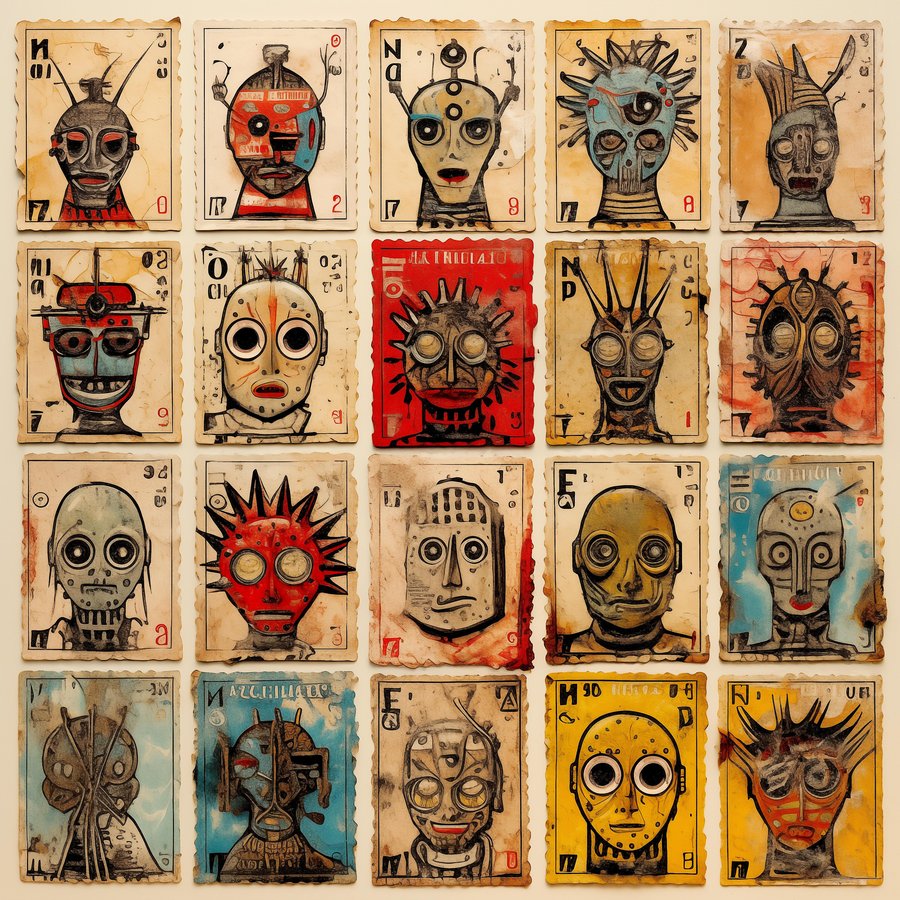
Sheet 17
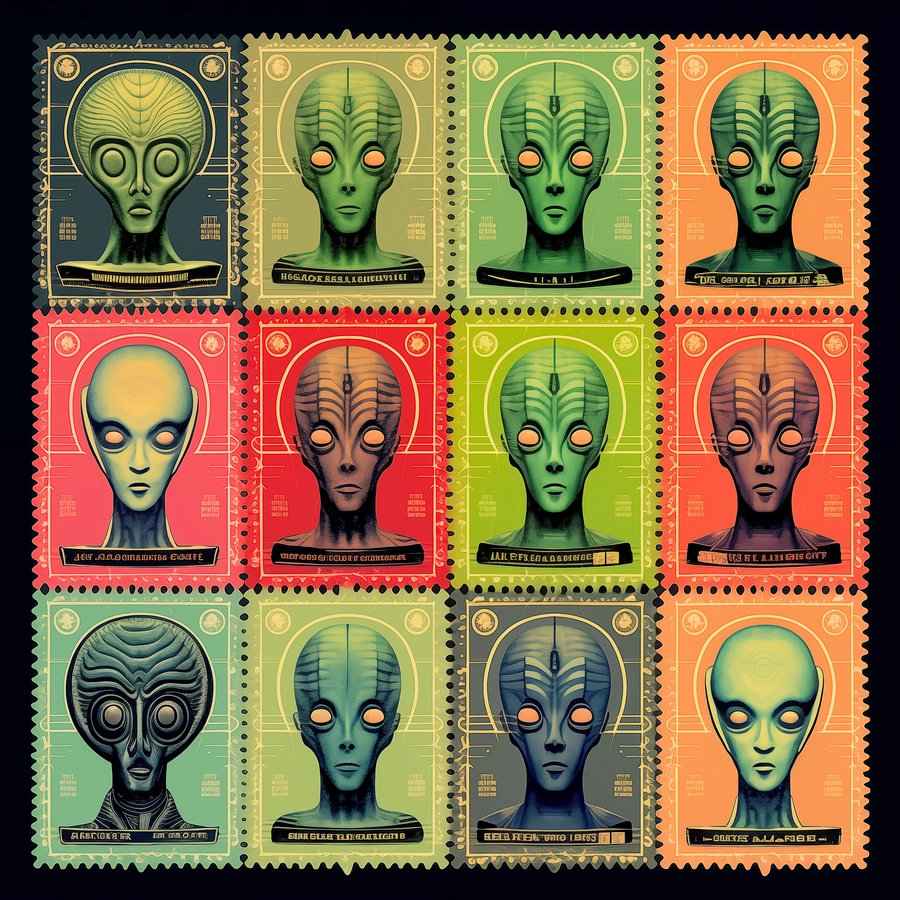
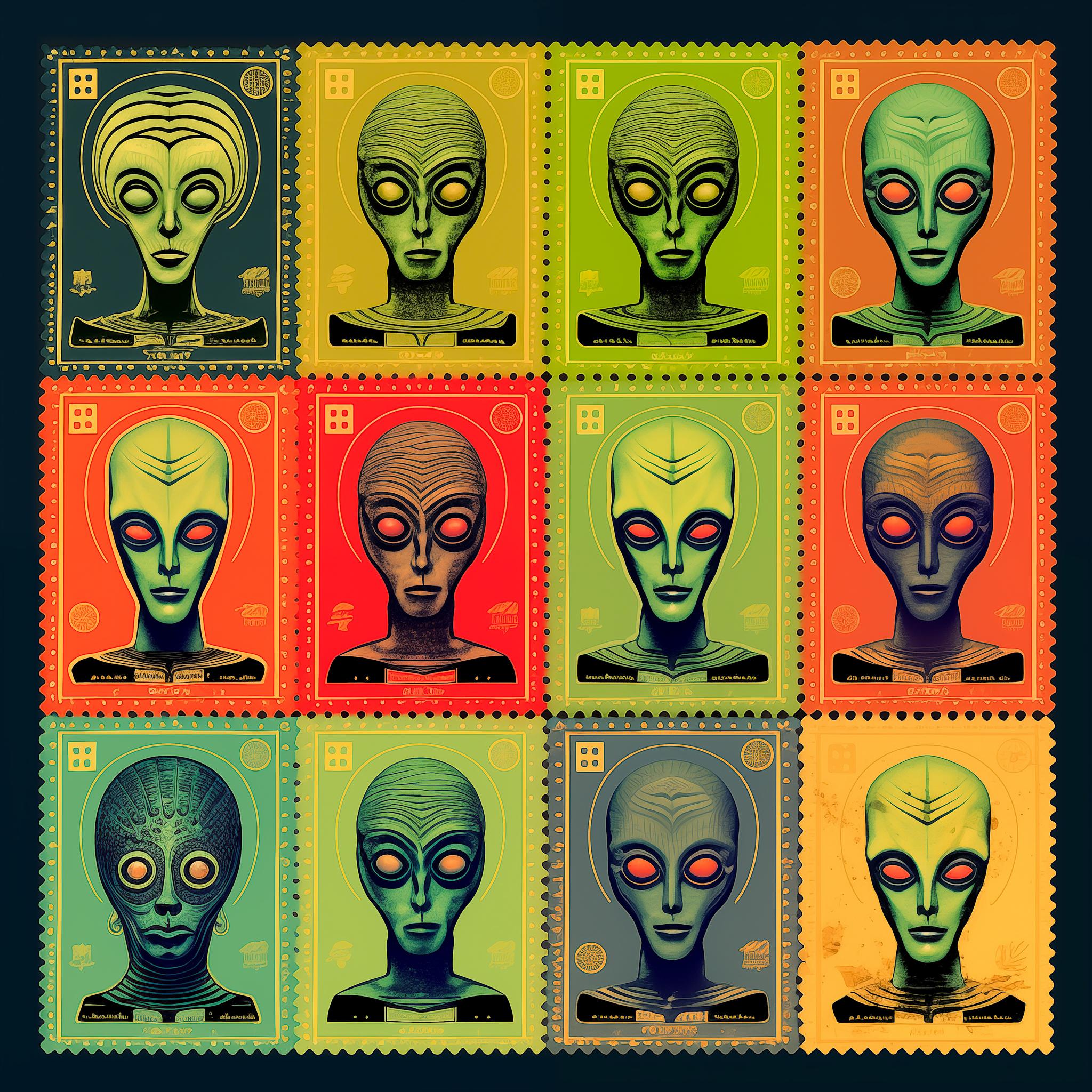
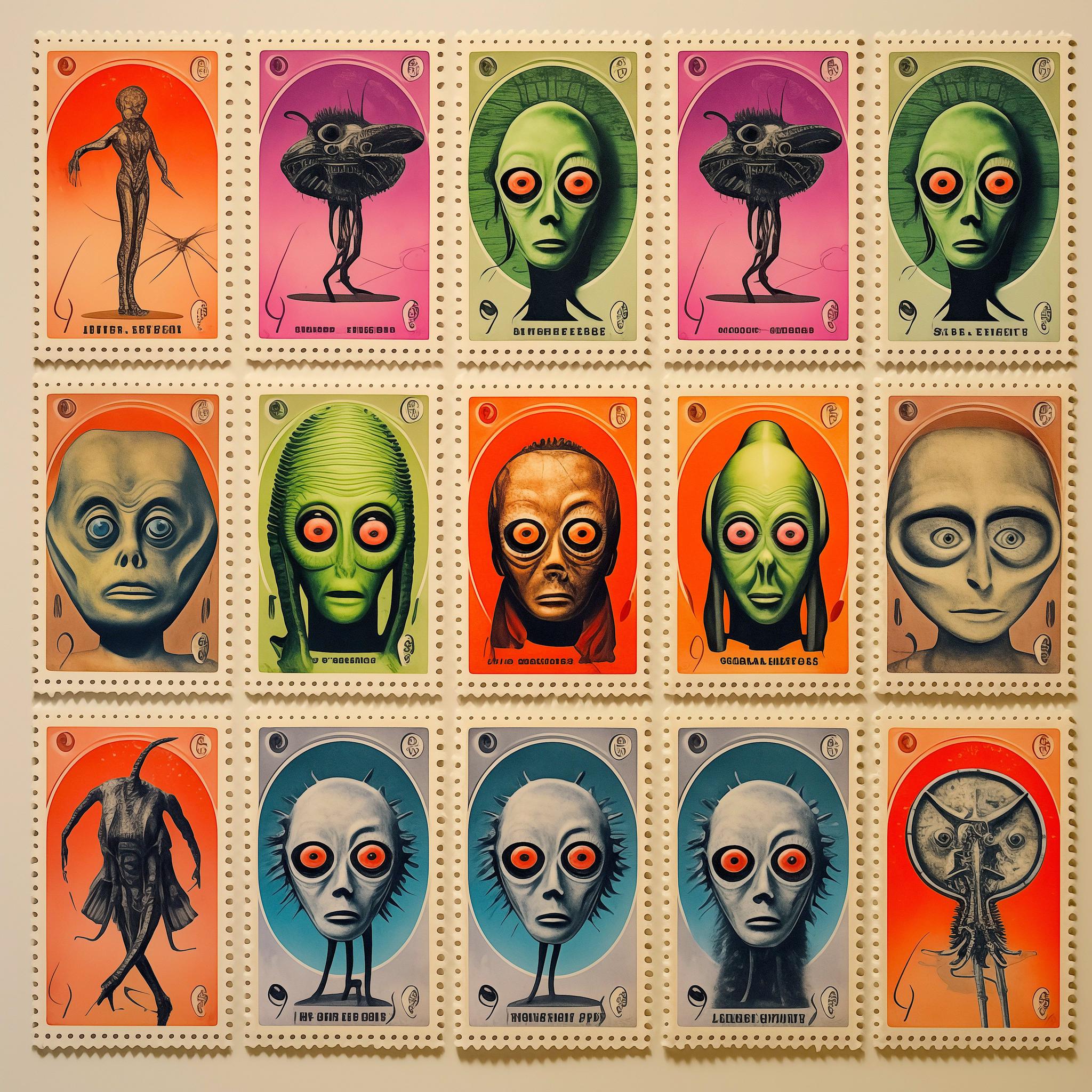
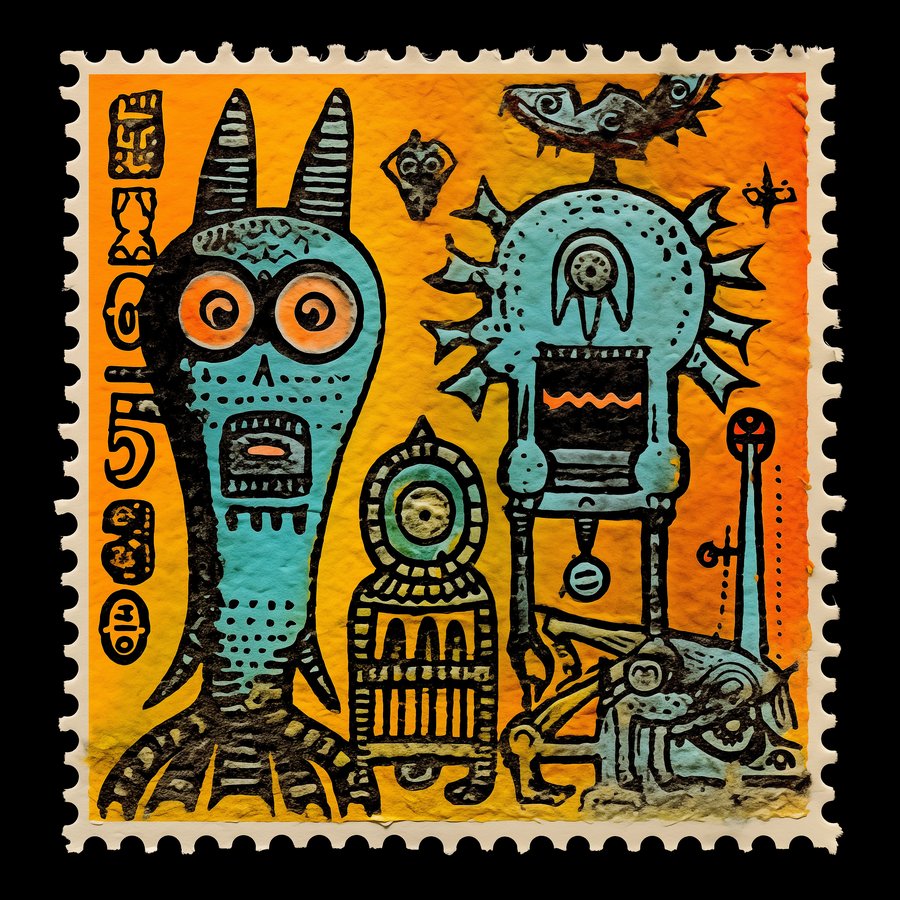
The ancient Martian postal system, built on telekinetic delivery, has left behind a legacy of extraordinarily rare stamps. Collectors of Martian ephemera — those who covet relics of otherworldly civilizations — prize these above all other artifacts.
Born in the sleepy hamlet of Temporal Bluffs, Johnathon Q. Timeford first made local headlines at the tender age of eight as the champion of the Clearwater County Spelling Bee, confidently spelling “Lysergic acid diethylamide” to a stunned audience. Humble in victory and inquisitive by nature, young Johnathon exhibited an early fascination with antiquated forms of communication. It was this genuine interest that prompted the genesis of his lifelong odyssey amongst the timeless ebb and flow of messages, parcels, and those tiny ambassadors of culture—stamps. Little did the people of Temporal Bluffs know that the inquisitive boy with a penchant for complex words would become the future founder of the Martian Philatelic Society under circumstances most extraordinary.
During a spelunking excursion gone astray, Timeford, then a graduate student in Chrononautical Studies at Berntsen University, stumbled upon a prismatic artifact known as the Chronovise—a relic rumored to be intertwined with the fabric of spacetime itself. Touching the artifact imbued him with mind-bending abilities: time travel and the power to shift his shape to better adapt to the vast corridors of history he now navigated.
It was with these newfound abilities that Johnathon resolved to explore the cosmos for collections unknown—burgeoning simultaneously into his destiny as heir to a legacy of postal peculiarities from the universe’s farthest flung civilizations.
Known affectionately as “Temporal Tim” by present-day philatelists, Timeford actively lives as a wandering chronicler of civilizations. Mundane reality forms the backdrop to his extraordinary society—hidden in plain sight, its meetings occurring at discreet intervals coinciding with astral anomalies predictive of his appearances.
Timeford’s society boasts a vast, ever-growing collection that showcases his exploration of Martian philately. His Martian catalog spans a spectrum of wonders: from the Red Sand Serenade series crafted from the very dust storms of the Valles Marineris to the luminescent Phobos-Deimos Pantheon collection, which will, under Martian moons’ light, project celestial mythos right before the beholders’ eyes. Each piece tells a story exquisitely woven into its crystalline or ferrous particles.
Other individual pieces of note include the Ice Cap Maestro, embedded with water pillars translated into frost imprints and the enigmatic Siren Sierras, holographic displays summarizing epic cross-dunal odysseys.
Though constituting an infinitesimal portion of Earth’s populated sphere, those privileged to be Society members revel in passionate study sessions with ‘The Temporal Collector’, as they affectionately dub Timeford. The benevolent traveler intermittently permeates their presence, shedding light on the nuances of alien geography, flora, and fauna encapsulated in each philatelic specimen. Through unspoken unanimity, The Martian Philatelic Society’s acolytes grasp that they too are guardian-curators of a vault filled not just with stamps, but with flattened roses of innumerable wilds—a cosmos captured in miniature.
MPSR —
Greetings, Earth collector. State your purpose here.
ESC —
Good day to you. I seek the Abecedarioxyzquijote, the marvel of Martian philately. For such a treasure, I come bearing gifts from my esteemed homeland.
MPSR —
Information: Abecedarioxyzquijote, high value. Detail your earthly offer.
ESC —
Pleasure. First, I present a pristine Penny Black, an esteemed philatelic piece of my Earth, and a generous amount of gold sovereigns, minted by her Royal Majesty’s treasury.
MPSR —
Acknowledged. Earth stamps hold material value. Gold sovereigns, acknowledged. Proposal is insufficient. Enhancement required for transaction.
ESC —
Surely the stamp is not beyond reach! Very well, what if we elevate this proposition with the latest technology? A Berliner Gramophone to grace your archives?
MPSR —
Next input required: cultural artifacts.
ESC —
Perplexing, indeed! Then, I propose including a first edition of Mr. Charles Dickens’ “Oliver Twist,” complete with annotations by the author himself.
MPSR —
Proposal under review. Earth literature status: prestigious. Adding to acquisition list. Current offer close to satisfactory.
ESC —
I field one more addition; it shall be the rolled parchment of the inaugural address by our President Cleveland, privately held till present.
MPSR —
Historical document, advised add-on. Offer approaches sufficient value for Abecedarioxyzquijote exchange. However, one last novelty; does Earth maintain the concept of manifest destiny? Present us a piece of land, dedicated in the Society’s honor.
ESC —
Land, eh? A Martian request for Earth soil? A stretch, but in the spirit of progression, I shall procure for the Society a title to acres of fertile land. Satisfied?
MPSR —
Martian Philatelic Society anticipates the arrival of earthly materials. Stamp transfer conditions near completion. Prepare for formal agreement.
ESC —
A correspondence for the annals! The ink shall dry on our treaties posthaste. Rest assured, Martian, your expectations will be met by Earth’s finest.
MPSR —
Expectations noted. Earth-diva.exchange complete upon physical acquisition. This communication terminates now. Await earthly envoy.
In aeons past, when Mars teemed with life, the Martians established a remarkable postal system that eclipsed Earth's in both sophistication and efficiency. Rather than using physical transportation, Martian postal workers harnessed the power of their minds to levitate letters and parcels, delivering them instantaneously to their recipients.
Mail was sorted in intricate telekinetic sorting centers, where seasoned operators used their minds' eye to scan contents and determine the precise mental coordinates of the mail recipients. As Martian technology evolved, the advent of collective holographic communication marked the beginning of the end for the traditional postal system — rendering physical mail obsolete. The ancient postage stamps became extremely valuable. Collectors prize these above all other artifacts.